Inside OSE: Eight Research Areas Driving Discovery at UNM
Departmental News

Posted: September 10, 2026
Explore Graduate Studies in Optical Science and Engineering at UNM
UNM’s Optical Science and Engineering program brings together interdisciplinary research, strong graduate training, and major research facilities to prepare students for work in optics, photonics, and quantum technologies.
The Optical Science and Engineering (OSE) Program at The University of New Mexico offers students an interdisciplinary path into graduate study in optics. Jointly administered by the Departments of Physics & Astronomy and Electrical & Computer Engineering, the program was established in 1983 and was the first interdisciplinary optics program in the United States. Today, it remains one of only five universities in the country offering both M.S. and Ph.D. degrees in optics.
OSE gives students the chance to learn and work across fields rather than staying inside only one department. That interdisciplinary structure helps connect research in light, materials, devices, and discovery with real-world applications.
OSE at a Glance
Why OSE at UNM?
UNM’s OSE program stands out because of its interdisciplinary structure and broad research environment. Students have opportunities to work with photonic and microelectronic devices, epitaxial materials, nanofabrication, characterization, optics, and emerging quantum technologies.
The program also provides access to 60,000 square feet of laboratories and a 3,800-square-foot cleanroom, supporting both fundamental and applied research.
Eight Major Research Areas
OSE research spans eight major areas, giving students a wide range of opportunities to explore how light can be used to understand, measure, design, and improve the world around us.
Using light–matter interactions to reveal the composition and structure of matter.  Developing optical tools to visualize and understand biological systems.
  Advancing light-based solutions for a sustainable and secure energy future.
  Pushing the frontiers of high-power, ultrafast, and novel laser systems.
 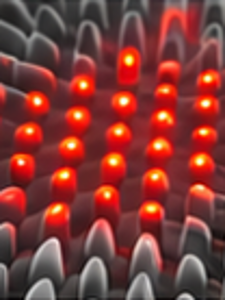 Tailoring light at the nanoscale for new functionalities.
  Exploring nonlinear light–matter interactions in advanced optical fibers.
  Designing and fabricating novel materials and devices for next-generation photonics.
  Harnessing quantum phenomena for sensing, communication, and information processing.